
Wolverine
Tissue Repair & Regeneration Research
For Research Use Only
What is Wolverine?
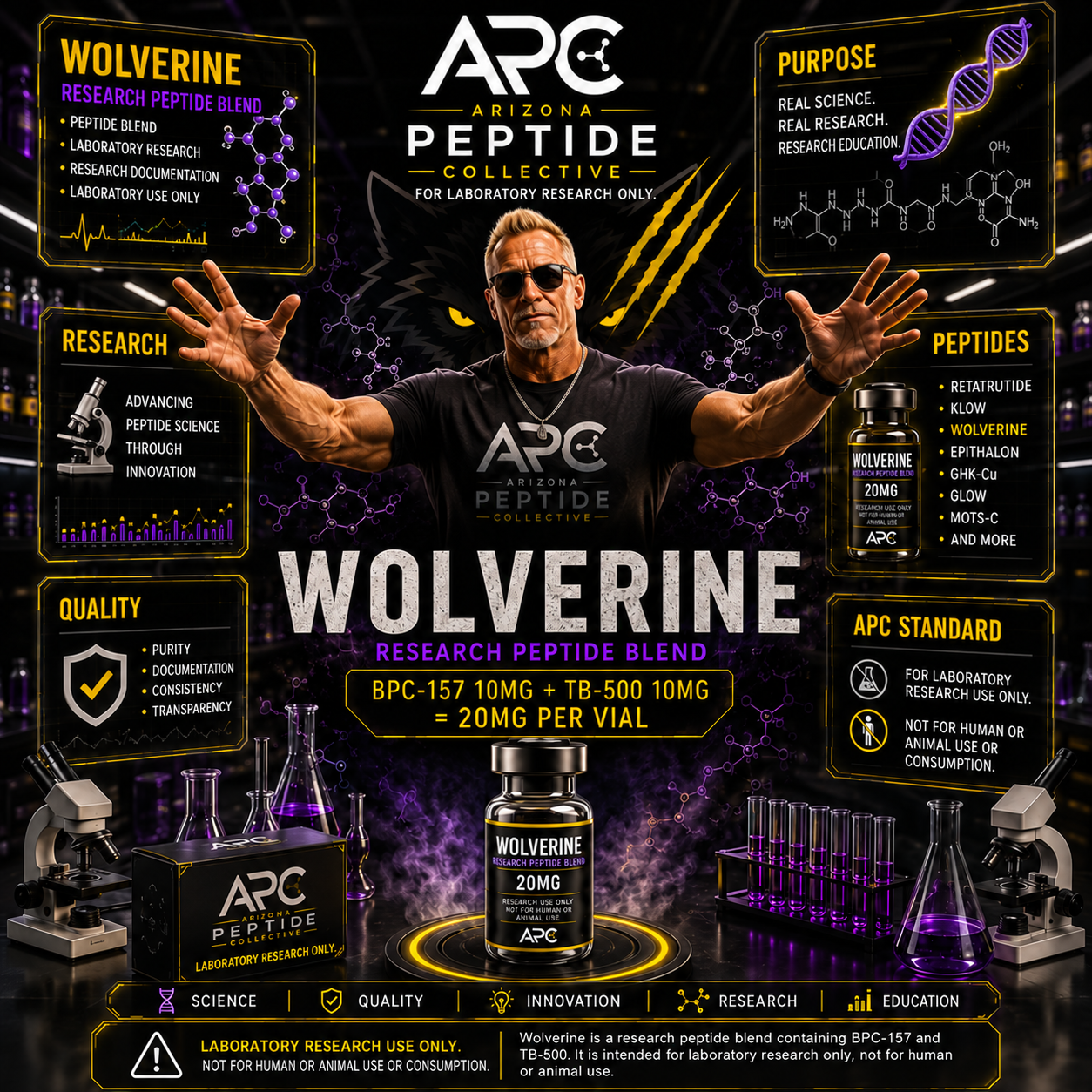
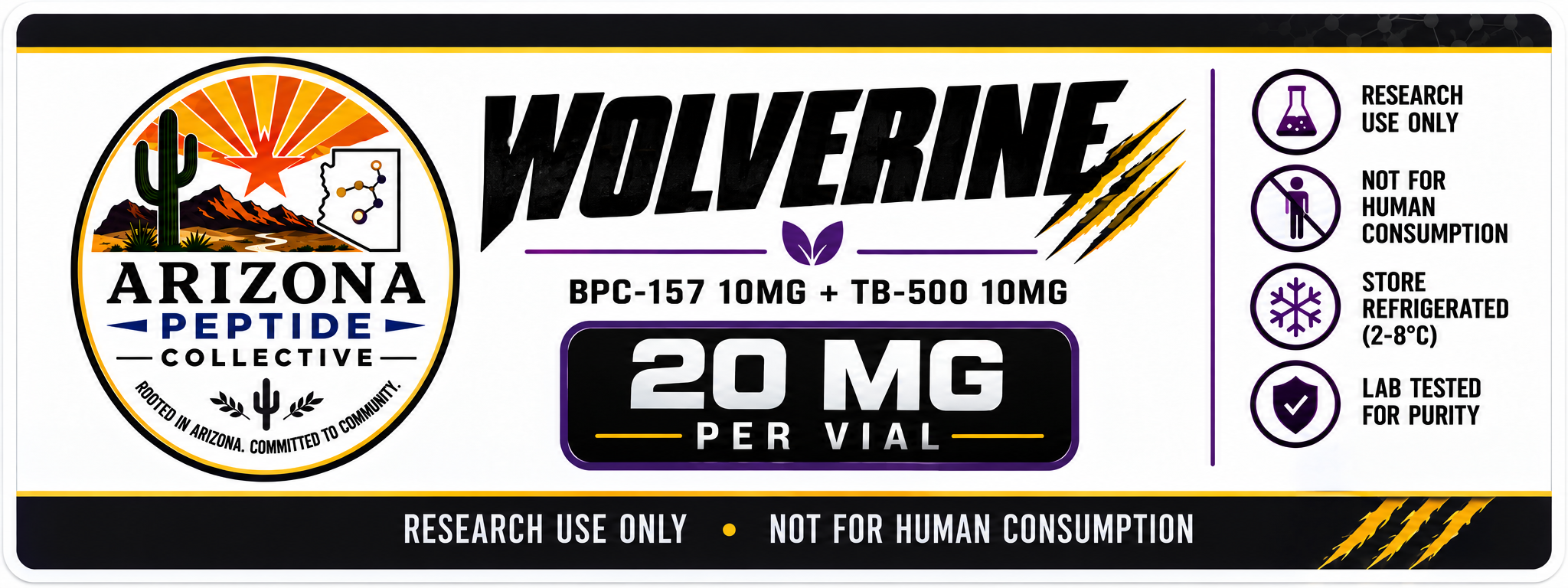
Wolverine is a 20 mg research peptide blend containing two research compounds: 10 mg BPC-157 and 10 mg TB-500.
BPC-157 and TB-500 have been investigated independently in preclinical research involving tissue biology, cellular signaling, and repair-related processes. BPC-157 research has particularly examined mechanisms associated with soft-tissue biology, while research involving thymosin beta-4—the biological basis associated with TB-500—has explored cell migration, angiogenesis, and tissue repair. PubMed
Wolverine brings these two research compounds together in a single research formulation, making it a subject of interest for investigating their individual and combined characteristics.
Research use only. Not medical advice.
Why are researchers interested?
Tissue Repair & Regeneration
Researchers have investigated BPC-157 and thymosin beta-4–related compounds in preclinical models involving tissue repair, cellular migration, and regenerative processes.
Cellular Signaling
Research has explored how these compounds may interact with biological signaling pathways involved in cell movement, growth, and tissue responses.
Inflammatory Processes
BPC-157 and thymosin beta-4–related research has also examined biological pathways associated with inflammation and cellular responses.
Ongoing Investigation
Research involving both compounds continues, with scientists studying their individual biological characteristics and how they may interact within experimental models.
Current Areas of Research
Researchers continue to investigate BPC-157 and thymosin beta-4–related compounds across several areas of cellular and tissue biology. Much of the research remains preclinical, and findings involving individual compounds should not be interpreted as evidence for the Wolverine combination itself.
Tissue Repair & Regeneration
Research has explored BPC-157 and thymosin beta-4–related biology in experimental models involving tissue repair, regeneration, and responses to tissue injury.
Cellular Migration
Scientists have investigated thymosin beta-4–related mechanisms involving cell migration and movement, processes that play important roles in tissue development and repair.
Inflammatory Signaling
Preclinical research has examined how BPC-157 and thymosin beta-4–related compounds may interact with biological pathways associated with inflammatory and cellular responses.
Vascular & Tissue Biology
Research involving thymosin beta-4 has also explored processes related to blood-vessel formation and tissue biology, while BPC-157 has been investigated in several models of tissue response and repair.
Frequently Asked Questions
What is Wolverine?
Wolverine is a 20 mg research peptide blend containing 10 mg BPC-157 and 10 mg TB-500. The two compounds have been studied independently in preclinical research involving tissue biology, cellular signaling, migration, and repair-related processes. PubMed
Why are BPC-157 and TB-500 studied?
BPC-157 has been investigated primarily in preclinical models involving tissue responses, inflammation, and repair-related processes. Research involving thymosin beta-4, the biological basis associated with TB-500, has examined cellular migration, tissue repair, vascular biology, and regeneration. PubMed
Is Wolverine approved for human use?
No. Wolverine is intended for research use only and is not approved for human consumption. Research involving its individual components does not establish the safety or effectiveness of the Wolverine combination in humans.
Has Wolverine itself been clinically studied?
Research on BPC-157 and thymosin beta-4–related compounds exists, but that should not be confused with clinical research on the specific Wolverine combination. Human evidence for BPC-157 remains limited, while much of the broader research remains preclinical. PubMed
Does research on the individual compounds prove that Wolverine works?
No. Research findings involving an individual compound cannot automatically be applied to a combination containing multiple compounds. The biological activity, safety, and characteristics of the specific Wolverine formulation require their own evaluation.
What is the difference between TB-500 and thymosin beta-4?
TB-500 is commonly described in relation to thymosin beta-4–related research, but they should not automatically be treated as identical substances. Research on thymosin beta-4 provides useful biological context, but findings involving thymosin beta-4 itself should not automatically be attributed to every TB-500 preparation.
Research Disclaimer
Arizona Peptide Collective is committed to providing accurate, science based educational information.
The information provided by Arizona Peptide Collective is intended solely for educational and informational purposes. The content presented throughout this Research Library summarizes publicly available scientific literature and ongoing areas of peptide research.
Arizona Peptide Collective does not provide medical advice, diagnose medical conditions, prescribe treatments, or recommend the use of any investigational compounds. The information on this website should not be interpreted as medical, pharmaceutical, or healthcare guidance.
Many peptides discussed within this Research Library remain investigational and may not be approved by the U.S. Food and Drug Administration (FDA) for general clinical use. Research in this field continues to evolve, and scientific understanding may change as new studies become available.
Visitors should consult a qualified healthcare professional regarding any medical questions or treatment decisions.