
Retatrutide
Triple Receptor Agonist Research
For Research Use Only
What is Retatrutide?
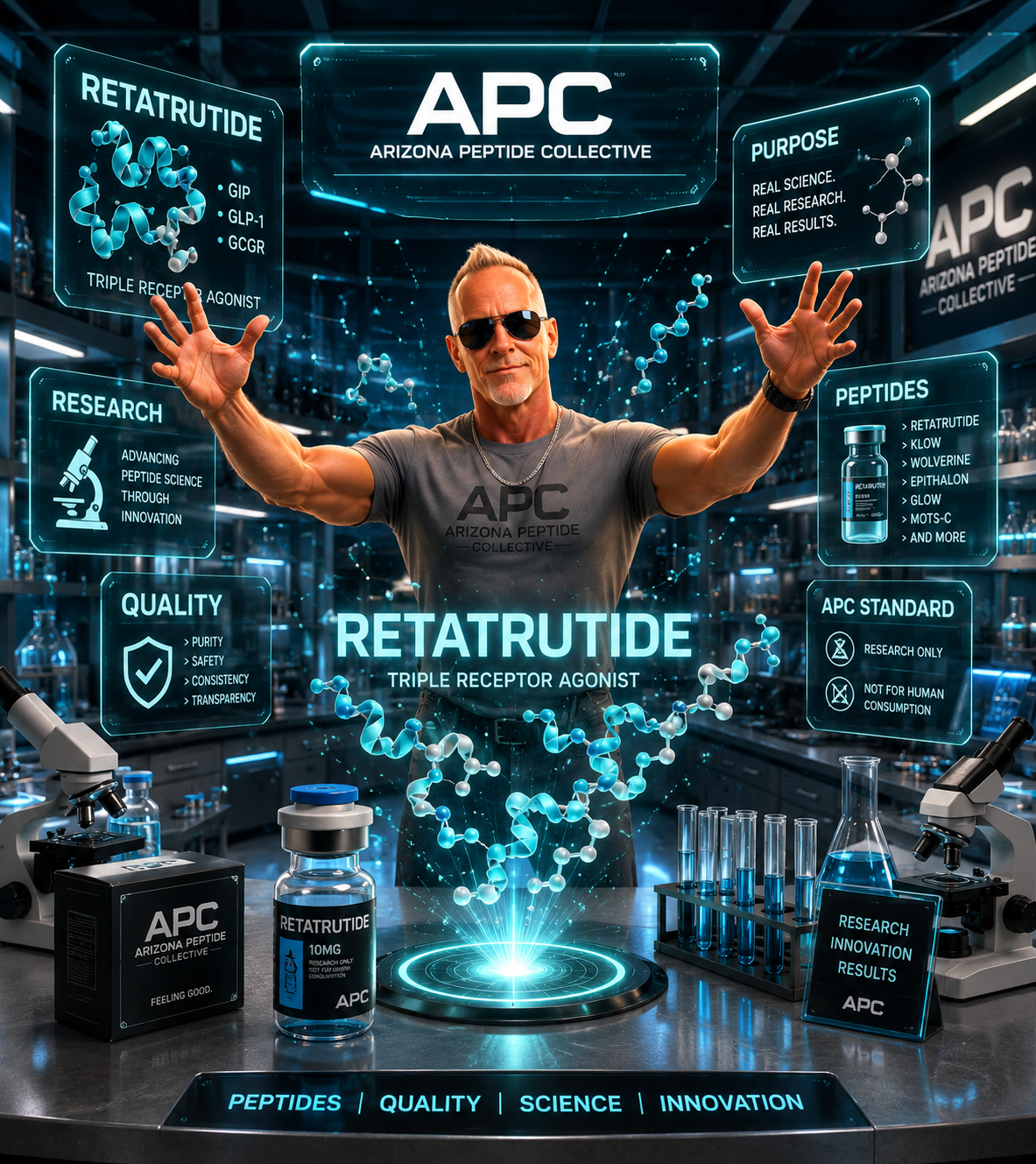
Retatrutide is an investigational peptide currently being studied for its effects on metabolism and energy regulation. Unlike traditional GLP-1 receptor agonists, Retatrutide activates three receptors—GLP-1, GIP, and glucagon
This triple-receptor activity has made it a significant focus of metabolic research. Research is ongoing, and this compound is intended for laboratory research purposes only.

Triple Receptors
Activates GLP-1, GIP, and Glucagon receptors
Why researchers are interested

Metabolic Research
Researchers are studying effects on metabolism and energy regulation.

Ongoing Investigation
Research continues to explore its properties in laboratory settings.
Current Areas of Research
Researchers are investigating Retatrutide across several areas of metabolic science. Current areas of research include:
Body Weight Regulation
Research is exploring how triple receptor activation may influence body weight regulation through multiple metabolic pathways.
Energy Expenditure
Unlike traditional GLP-1 receptor agonists, researchers are investigating whether glucagon receptor activation may influence energy expenditure and metabolic activity.
Glucose Regulation
Scientists are studying Retatrutide’s potential effects on glucose metabolism by simultaneously activating GLP-1, GIP, and glucagon receptors.
Cardiometabolic Health
esearchers are studying potential effects on markers associated with cardiometabolic health, including lipid metabolism and insulin sensitivity.
Future Research
As clinical research continues, investigators are exploring additional applications while further evaluating safety, pharmacology, and long-term outcomes.
Frequently Asked Questions
Have questions about Retatrutide? Here are the answers to the most common questions based on current science.
What is Retatrutide?
Retatrutide is an investigational peptide being studied for its activity at three different hormone receptors involved in energy balance and metabolism. It is currently being evaluated in research settings and has not been approved for general clinical use.
Why are researchers interested in Retatrutide?
Researchers are exploring whether activation of multiple metabolic pathways may provide broader effects than targeting a single pathway alone. Current studies are examining weight regulation, glucose metabolism, energy expenditure, and cardiometabolic health.
Is Retatrutide FDA approved?
No. Retatrutide remains an investigational compound and continues to be evaluated through clinical research.
Can Retatrutide be purchased for personal use?
Arizona Peptide Collective provides educational information intended to help explain current areas of peptide research. Visitors should understand that investigational compounds are still being studied and should always follow applicable laws and regulations.
Where can I learn more?
Continue exploring our Research Library to discover educational information about peptides such as KLOW, Epithalon, Wolverine, GHK-Cu, and others as new research becomes available.
Research Disclaimer
Arizona Peptide Collective is committed to providing accurate, science based educational information.
The information provided by Arizona Peptide Collective is intended solely for educational and informational purposes. The content presented throughout this Research Library summarizes publicly available scientific literature and ongoing areas of peptide research.
Arizona Peptide Collective does not provide medical advice, diagnose medical conditions, prescribe treatments, or recommend the use of any investigational compounds. The information on this website should not be interpreted as medical, pharmaceutical, or healthcare guidance.
Many peptides discussed within this Research Library remain investigational and may not be approved by the U.S. Food and Drug Administration (FDA) for general clinical use. Research in this field continues to evolve, and scientific understanding may change as new studies become available.
Visitors should consult a qualified healthcare professional regarding any medical questions or treatment decisions.
Research only. Not medical advice.
Explore More Research
KLOW
Research exploring recovery and muscle health.
Epithalon
Research focused on aging and cellular biology.
GHK-cu
Research involving skin, collagen, and tissue repair.
Wolverine
Research investigating tissue healing and regeneration.