
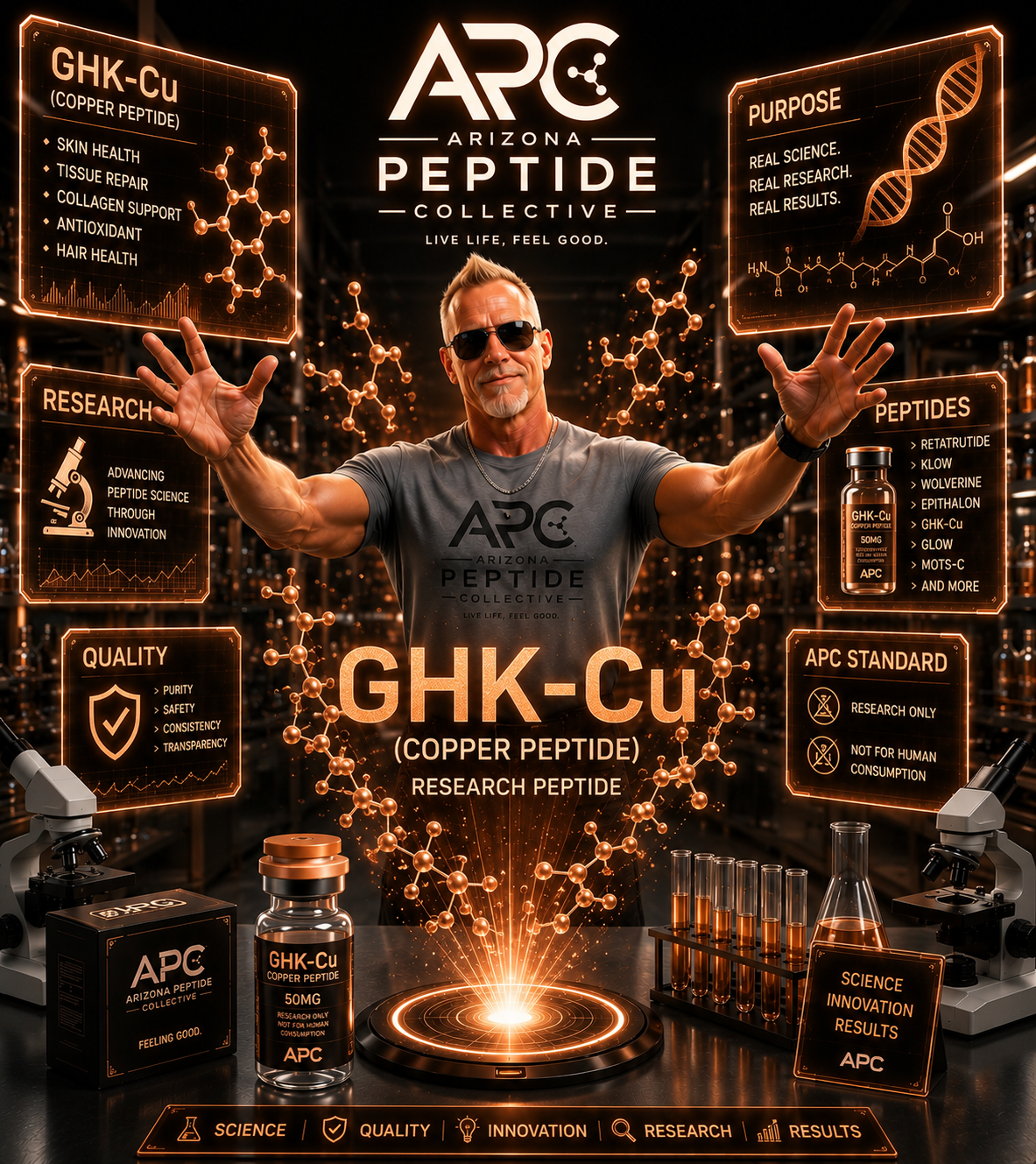
GHK-Cu
Copper Peptide Research
For Research Use Only - Not Medical Advice
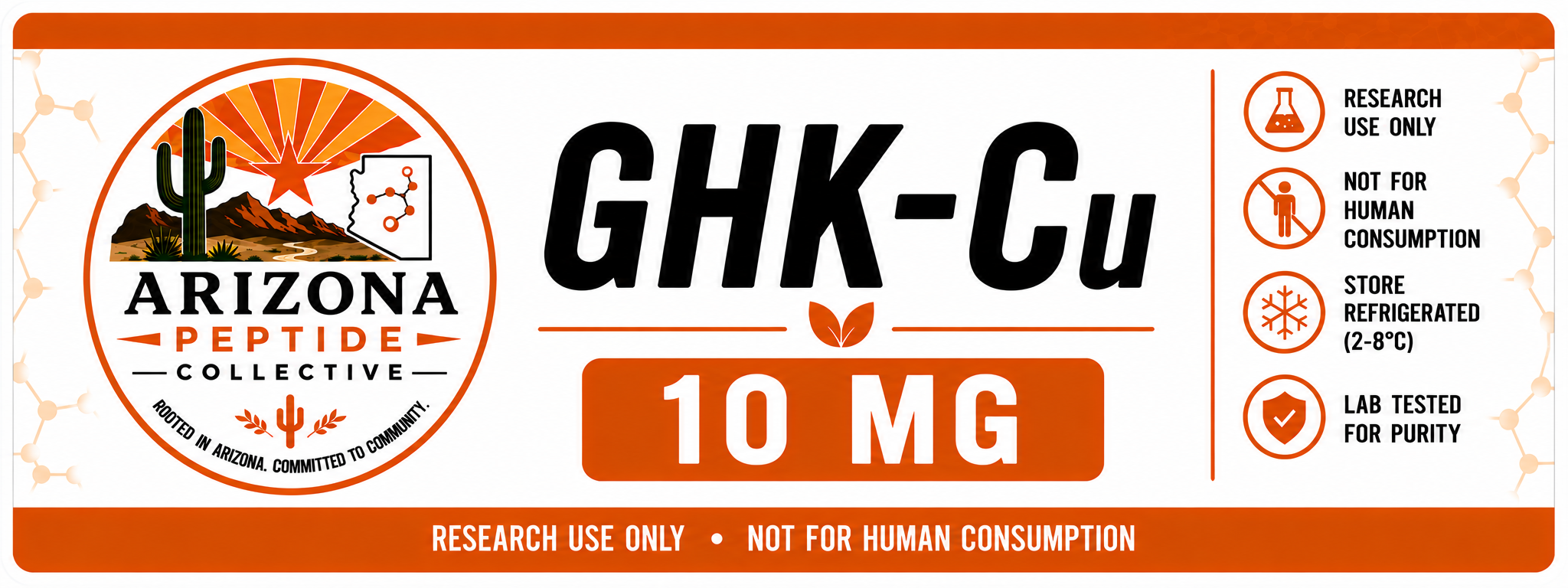
What is GHK-Cu?
GHK-Cu (Glycyl-L-histidyl-L-lysine copper complex) is a naturally occurring copper-binding peptide found in the human body. Researchers are studying GHK-Cu because of its role in cellular signaling and its involvement in biological processes related to tissue maintenance, skin biology, and wound repair. It has become one of the most widely researched peptides in regenerative and cellular biology.
Research Use Only. Not Medical Advice.

Cellular Signaling
Researchers are studying GHK-Cu because of it’s role in cellular communication and biological signaling involved in tissue maintenance.
Why researchers are interested

Tissue Biology
Current research explores how GHK-Cu may influence biological processes associated with tissue repair and extracellular matrix function.

Ongoing Investigation
Scientists continue to investigate GHK-Cu’s properties in regenerative biology, skin science, and cellular research.
Current Areas of Research
Researchers are investigating GHK-Cu across several areas of cellular and regenerative biology. Current areas of research include:
Tissue Biology
Researchers are studying GHK-Cu’s role in biological processes associated with tissue maintenance and cellular repair.
Collagen Research
Scientists are investigating GHK-Cu’s relationship with collagen production and connective tissue biology in laboratory models.
Skin Biology
Current research explores how GHK-Cu interacts with pathways involved in skin structure and extracellular matrix biology.
Cellular Signaling
Ongoing studies examine how GHK-Cu participates in cellular communication and biological signaling pathways.
Future Research
As clinical research continues, scientists are exploring additional applications of GHK-Cu in regenerative biology while expanding knowledge of its cellular mechanisms.
Frequently Asked Questions
Have questions about GHK-Cu? Here are the answers to the most common questions based on current science.
What is GHK-Cu?
GHK-Cu (Glycyl-L-histidyl-L-lysine copper complex) is a naturally occurring copper-binding peptide found in the human body. It is widely studied for its role in cellular signaling and tissue biology.
Why are researchers interested in GHK-Cu?
Researchers are investigating GHK-Cu because of its involvement in biological processes related to tissue maintenance, skin biology, collagen research, and cellular communication.
What areas of research are currently being explored?
Current laboratory research includes tissue biology, skin science, collagen biology, cellular signaling, and regenerative biology. Scientists continue to investigate GHK-Cu’s biological mechanisms and functions.
Is GHK-Cu approved for human use?
No. GHK-Cu is intended for research use only and is not approved for human consumption. It should be used only in appropriate laboratory research settings.
How is GHK-Cu different from other research peptides?
Unlike peptides primarily studied for metabolic pathways, GHK-Cu is most often investigated for its role in cellular biology, tissue maintenance, and regenerative research. Its unique interaction with copper has made it a significant subject of scientific study.
Research Disclaimer
Arizona Peptide Collective is committed to providing accurate, science based educational information.
The information provided by Arizona Peptide Collective is intended solely for educational and informational purposes. The content presented throughout this Research Library summarizes publicly available scientific literature and ongoing areas of peptide research.
Arizona Peptide Collective does not provide medical advice, diagnose medical conditions, prescribe treatments, or recommend the use of any investigational compounds. The information on this website should not be interpreted as medical, pharmaceutical, or healthcare guidance.
Many peptides discussed within this Research Library remain investigational and may not be approved by the U.S. Food and Drug Administration (FDA) for general clinical use. Research in this field continues to evolve, and scientific understanding may change as new studies become available.
Visitors should consult a qualified healthcare professional regarding any medical questions or treatment decisions.
Research only. Not medical advice.
Explore More Research
KLOW
Research exploring recovery and muscle health.
Epithalon
Research focused on aging and cellular biology.
Retatrutide
Research exploring metabolism and energy regulation.
Wolverine
Research investigating tissue healing and regeneration.